Posts

Showing posts with the label Australian bird

Australian Birds: Cattle Egret (Ardea ibis)

Image
This white egret was biding his time by the edge of a small local lake, when a white-faced heron flew past.  Once it had gone, the egret continued to contemplate the water, in peace.  To find out more about the Australian cattle egret, you can visit the following sites: http://www.birdsinbackyards.net/species/Ardea-ibis ; http://www.environment.gov.au/cgi-bin/sprat/public/publicspecies.pl?taxon_id=1000 ; http://en.wikipedia.org/wiki/Cattle_egret ; http://www.parks.tas.gov.au/index.aspx?base=19294 ; http://australianmuseum.net.au/Cattle-Egret ; http://www.graemechapman.com.au/library/viewphotos.php?c=128 .

Australian Birds: Striated Pardalote (Pardalotus striatus)

Image
On a grey morning walk, I had just about given up on finding more birds to photograph, when I noticed a little bird diving down to where a culvert let out into a larger drain. A second bird darted into the tree above, and stayed long enough for me to take a few shots of it. This was my first encounter with a striated pardalote in Canberra. To find out more information on these tiny birds, you can visit the following sites: http://members.ozemail.com.au/~BAJAN/Pardalotes/Striated%20Pardalote.htm ; http://birdlife.org.au/bird-profile/striated-pardalote ; http://www.birdsinbackyards.net/species/Pardalotus-striatus .

Australian Birds: Wood Ducks (Chenonetta jubata)

Image
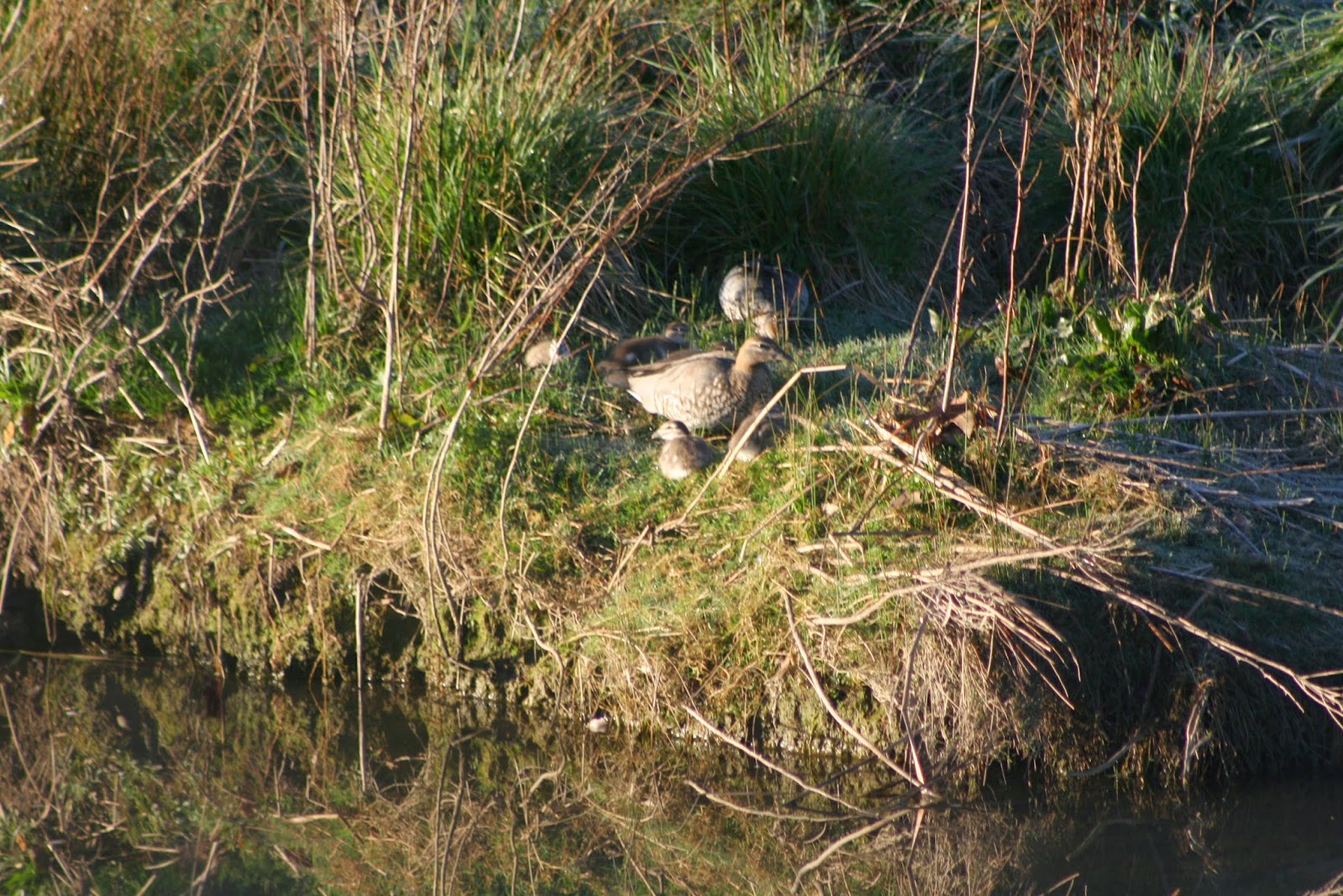
On one of my early morning walks around the lake, I was fortunate enough to spot these beauties by in one of the tributaries. I rarely get to see the ducklings, so I was quite pleased to see these little ones with their mother.  Mum kept a close eye on me for the entire shoot.  And, in the end, I discovered the reflections in the water. You can find out more about Australian wood ducks from the following sites: http://en.wikipedia.org/wiki/Australian_wood_duck ; http://www.birdsinbackyards.net/species/Chenonetta-jubata ; http://australianmuseum.net.au/Australian-Wood-Duck ; http://www.arkive.org/australian-wood-duck/chenonetta-jubata/ ; http://www.mdahlem.net/birds/2/austwood.php ; http://www.koala.net/australian-wood-duck.html .

Australian Birds - Great Pied Cormorant (Phalacrocorax varius)

Image
This great pied cormorant was sunning itself on a riverbank on a cold spring morning in Canberra. It wasn't overly fond of the camera, but it waited until I stopped taking photos before flying away. I've seen him frequenting the local lake, so I'll try for some clearer shots as we come into summer. You can find out more about great pied cormorants from the following sites: http://www.birdsinbackyards.net/species/Phalacrocorax-varius ; http://en.wikipedia.org/wiki/Australian_pied_cormorant ; http://www.birdsaustralia.com.au/bird-profile/pied-cormorant ; http://www.birdlife.org/datazone/speciesfactsheet.php?id=3677 .

Australian Birds: Crested Pigeons (Ocyphaps lophotes)

Image
These native pigeons visit my backyard. They're pretty shy, even when bribed with seed, and will only tolerate the camera for short periods of time. At first it was only one,  weighing up the camera angle vs. the food.  When the camera didn't give chase,  he gave the all-clear and a few of his friends came down to join him. More information on top-knot pigeons can be found at the following sites: http://www.birdsinbackyards.net/species/Ocyphaps-lophotes ; http://en.wikipedia.org/wiki/Crested_pigeon ; birdlife.org.au/bird-profile/crested-pigeon ; http://www.climatewatch.org.au/species/birds/crested-pigeon ; http://www.arkive.org/crested-pigeon/ocyphaps-lophotes/ ; http://www.abc.net.au/science/articles/2009/09/02/2674184.htm .

Australian Birds: Eastern Rosella (Platycercus eximius)

Image
I can never tell what I'll find when I head out of the house. This fine afternoon, I found a pair of eastern rosellas, but only one of them would oblige me by sitting long enough to sit still for a photograph or three. He looked very handsome in the afternoon light, even when preparing to fly. I encountered them on another walk - this one in the morning but, as soon as I turned the camera towards them, they took wing. Here's all I got. To find out more about the crimson rosella, try visiting the following sites: http://en.wikipedia.org/wiki/Eastern_rosella ; http://www.birdlife.org.au/bird-profile/eastern-rosella ; https://www.youtube.com/watch?v=eAhduTGV4y4 ; http://www.parks.tas.gov.au/?base=13581 ; http://www.mdahlem.net/birds/12/eastros.php ; http://www.birdsinbackyards.net/species/Platycercus-eximius .

Australian Birds: Superb Parrot (Polytelis swainsonii)

Image
On a grey morning, I went out to look for birds. I didn't have a lot of luck, but I did spot these beauties coming in to land on this tree. I'd noticed them on other walks, on the ground, but this particular morning, they did not oblige by coming out of the tree. The first shot shows where they landed.  The next few shots catch show a glimpse of yellow and red. But it wasn't until this one turned side on, that I had enough to be able to identify them. I'm thinking the males have yellow faces.  And the females or juveniles are all green... maybe. Apparently, the superb parrot is a threatened species, so I feel particularly lucky to have been able to photograph these. More information on superb parrots can be found at the following sites: http://www.birdsinbackyards.net/species/Polytelis-swainsonii ; http://en.wikipedia.org/wiki/Superb_parrot ; http://www.environment.nsw.gov.au/threatenedspeciesapp/profile.aspx?id=10645 ; http:/...

Australian Birds: Crimson Rosella (Platycercus elegans)

Image
So, I went for a bit of a walk, trying to get some different shots of the crimson rosellas. At first they proved to be very elusive, and they stayed that way for the morning. This was the only shot I had of a pair in a tree. For bright red and blue (and green) birds, they can be quite difficult to see, when they are feeding in long grass.  Harder still when they bend down to feed. There are two birds in each of the shots below.  And there they are again. If even red and blue birds can hide in the long grass, what chance do we have against velociraptors? You can find more about crimson lorikeets from the following sites: http://www.birdsinbackyards.net/species/Platycercus-elegans ; http://en.wikipedia.org/wiki/Crimson_rosella ; http://birds.about.com/od/mediumbirds/p/Crimson-Rosellas-As-Pets.htm ; http://parkweb.vic.gov.au/__data/assets/pdf_file/0012/322203/rosella4.pdf ; http://australianmuseum.net.au/Crimson-Rosella ...

Australian Birds—Soggy Magpies (Cracticus tibicen)

Image
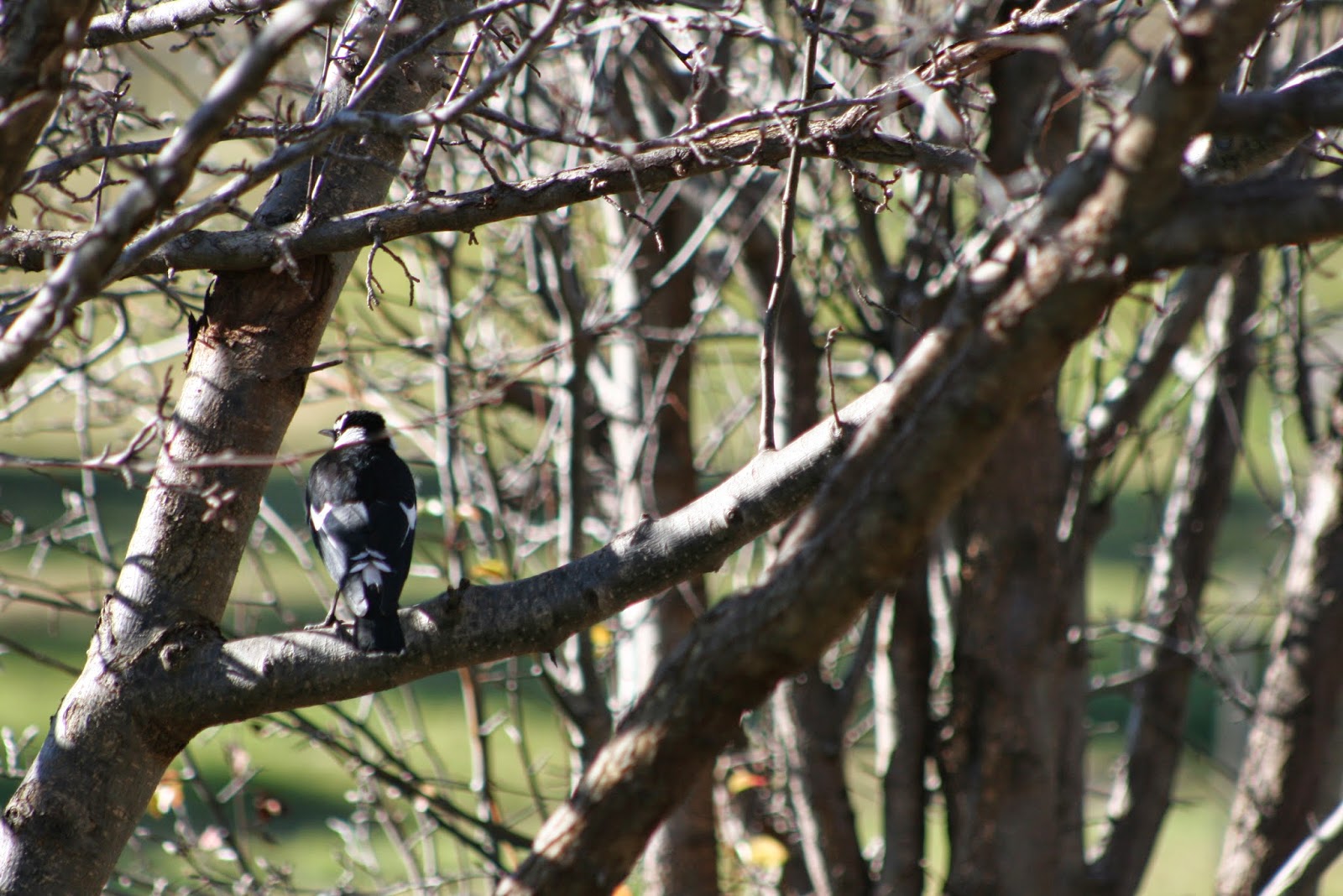
I know I've written about magpies before, but I couldn't resist taking a few shots of some very wobegone-looking birds who came to visit on a very wet Saturday morning in August, this year. They looked much happier once the rain had stopped. For more information on Magpies, check out: https://www.youtube.com/watch?v=4858bWD-DPU http://en.wikipedia.org/wiki/Magpie http://en.wikipedia.org/wiki/Australian_magpie http://www.birdsinbackyards.net/species/Cracticus-tibicen http://www.environment.nsw.gov.au/animals/TheAustralianMagpie.htm http://www.climatewatch.org.au/species/birds/australian-magpie

Australian Birds—Peewee (Grallina cyanoleuca)

Image
I seem to have a love for these little guys. They sometimes come and perch in my backyard, but they usually don't stay very long, once the camera appears. This one was enjoying the sun on a cold winter's day, and then he noticed the camera, checked it out twice - yup, still there. After moving to a safer distance, he was joined by a friend, and continued to watch the camera, with a careful eye. You can find out more about the magpie lark at the following sites: http://en.wikipedia.org/wiki/Magpie-lark ; http://www.birdsinbackyards.net/species/Grallina-cyanoleuca ; http://birdlife.org.au/bird-profile/magpie-lark ; http://bird.net.au/bird/index.php?title=Magpie-lark ; and http://www.climatewatch.org.au/species/birds/magpie-lark .

Australian Birds - White-Faced Heron (Egretta novaehollandiae)

Image
I've seen this little guy around a lot lately, but never had my camera on me. When I finally saw him again, it was on a day when I had a case of "bad camera", but a couple of the shots are worth showing here. He was feeding in an open storm-water drain, not bothered at all by his reflection or the fading light, and then he turned and started walking up the drain towards me. At first, he didn't seem to notice me,  but then, he stopped and took a good look, and left shortly thereafter. You can find out more about white-faced herons at the following sites: http://www.birdsinbackyards.net/species/Egretta-novaehollandiae; en.wikipedia.org/wiki/White-faced_heron; http://birdlife.org.au/bird-profile/white-faced-heron; http://www.parks.tas.gov.au/indeX.aspX?base=17061; and http://www.arkive.org/white-faced-heron/egretta-novaehollandiae/ .